China: friend or foe?
Amid global turmoil, Brussels seeks to take back control over the EU’s relationship with China.
Next week, the European Commission will hold an ‘orientation debate on EU-China relations’. It will take place at the level of the College of Commissioners, meaning that it is a closed, strategic discussion intended to set political direction, in general terms, following recent tensions and shifts in the relationship between Brussels and Beijing.
A changing world order
Over the past decade, China has become more authoritarian domestically and more assertive internationally, with the European Union coming to view China as both a must-have partner and a fierce rival. But going forward, Brussels needs a coherent, proactive, long-term strategy for its relations with China, one that addresses issues related to the global order, human rights, economic security and also conflict prevention.
Alicia García-Herrero is chief economist for the Asia-Pacific region at the major French corporate and investment bank Natixis. She is also a fellow at two think-tanks: Bruegel in Europe and the East Asian Institute in Singapore. She tells our colleagues at esRadio Castilla y León that while the EU really does need a better relationship with China, especially in light of its deteriorating relationship with the United States, China is not making this easy.
Alicia García-Herrero, Chief Economist for the Asia-Pacific at Natixis (in Spanish):
“China is not really offering Europe anything that, shall we say, improves either the economic conditions – that is, the relationship itself – or the net benefit to Europe from this relationship... since for the time being, such a benefit does not exist. But there is also the problem [...] that China continues to support Russia in the war against Ukraine. And these two things – the fact that we are not gaining economically, we have a huge trade deficit, with companies making very little money in China, and also the security issue with Russia – mean that Europe wants to improve the relationship, but cannot quite see how to do so.”
Yet, she goes on, if we look beyond the economy, there are certainly benefits to cooperation – and these benefits are mutual.
Alicia García-Herrero, Chief Economist for the Asia-Pacific at Natixis (in Spanish):
“There are certainly areas where we can cooperate. Everything I refer to as ‘global goods’, from space to climate change. There are so many areas where we need one another. I don’t want to hear it said even once more that we need China. No, we need one another.”
A European Parliament delegation from the Committee on the Internal Market and Consumer Protection visited China last week (31 March to 2 April) – the first such trip in eight years. The visit may have focused on e-commerce, product safety and compliance with EU rules, but it is a clear sign that Beijing and Brussels are cautiously trying to renew dialogue.
Indeed, Lithuanian Renew Europe MEP Petras Auštrevičius believes that China is on a mission to reshape how it is perceived in Europe. And he cautions the bloc against “political naivety” – in other words, against putting business interests before politics. He is speaking to Žinių Radijas.
Petras Auštrevičius, Member of the European Parliament – Renew Europe, Lithuania (in Lithuanian):
“The Chinese are trying to influence the views of Members of the European Parliament and, apparently, those of some member states as well. ‘Let’s trade, let’s be friends,’ they say, ‘those disagreements have been resolved, everything is fine now’. In other words, let’s sit down at the table as partners and forget about all that rivalry. Some, in my view, have already caught this ‘bug’, but I do not believe this is the right approach. In essence, it would be quite disastrous to forget that China is a strategic rival. Even more so if we consider its special relationship with Russia and the threats arising from this, especially for those member states on the eastern flank.”
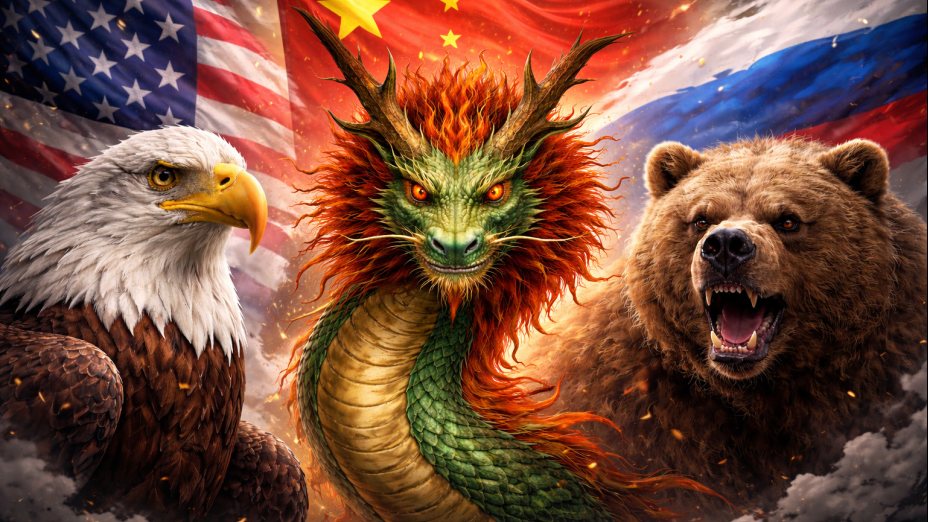
Numerous commentators suggest that, more important than fostering closer links with the US and China, Europe must assert itself as a strong ‘third bloc’ in the changing world order – essentially forming a triangle with these powers. But conservative politician and former Portuguese foreign minister Paulo Portas believes this position – at least in the eyes of Beijing and Washington – may already have been filled.
Speaking at a recent Social Democratic Party event covered by Renascença, Portas said that Europe is struggling to prevent itself from becoming a geopolitical “outsider”.
Paulo Portas, Former Foreign Minister of Portugal (in Portuguese):
“Stemming from this notion of a system of powers – which is a nascent idea that is gaining traction – there appears to be a concept circulating in certain circles close to the US administration of a ‘triangle of powers’. And this triangle of powers would basically consist of the United States, China and Russia. This is where the problem lies. First, because elevating Russia to the status of a superpower is a clear exaggeration. Unlike China, Russia has never diversified its economy. Oil, gas, gas, oil... occasionally a few diamonds, occasionally some gold, but essentially fossil fuels. [...] And this triangle – the US, China and Russia – is evidently formed at Europe’s expense. The one not in the triangle is Europe.”
So, Portas thinks the US view of the world order is tri-polar. Meanwhile, Alicia García-Herrero believes Beijing’s preferred world order is somewhat different: more like a bicycle wheel.
Alicia García-Herrero, Chief Economist for the Asia-Pacific at Natixis (in Spanish):
“Essentially, it’s a world where China dominates and has Russia, India, Brazil and Europe radiating out from the centre, which is China. This [hub-and-spoke scenario] doesn’t suit us at all, because we’d simply be one of the ‘spokes’ – that is, there’s a sort of central point where China is, and you’re a branch off this. And the idea is that there should be no interconnection between all these branches extending out from China. But that doesn’t suit us. We must build relationships with the rest of the world, with everyone, with as many countries as we can – with India, with Pakistan, with everyone – to create a network of connections.”
In practical terms...
In response to the somewhat uncomfortable position in which the EU finds itself, one practical approach it is taking is to develop a ‘de-risking' strategy aimed at reducing its dependence on foreign powers without completely disengaging. This strategy emphasises targeted risk management, diversification and strengthening the EU's own capabilities.
One area in which this is critical – if you’ll pardon the pun – is that of critical raw materials, in particular rare earths. The EU still depends almost solely on China for these, as confirmed by a European Court of Auditors report that has just been released. Keit Pentus-Rosimannus, a member of the ECA, talks to Kuku Raadio.
Keit Pentus-Rosimannus, Member of the European Court of Auditors (in Estonian):
“When it comes to rare earth metals, for example, China essentially has a monopoly. China currently dominates the market for all such critical materials. At the same time, I don’t like how this is sometimes over-mystified. What China has done is nothing superhuman – they just got started very early. It was back in the 1980s when China decided to invest heavily in the field of raw materials. And they have developed the entire production chain, from exploration and extraction through to processing, recycling and even reuse. So, the entire chain has been developed in China. But they aren’t really doing anything fundamentally different from what the EU is trying to do now; it’s just that we started much later.”
But, Pentu-Rosimannus adds, Europe has finally woken up and seems more willing, now, to put its money where its mouth is.
Keit Pentus-Rosimannus, Member of the European Court of Auditors (in Estonian):
“Over the last two EU budgets, a total of 1.8 billion euros has been allocated to sectors related to critical raw materials. Now, following the publication of our report, the European Commission has pledged to mobilise an additional three billion euros over the next 12 months. This is not direct funding; it is support for these projects in the form of various guarantees. They can succeed, if they are given a little push and make a concerted effort.”
https://kuku.pleier.ee/uudised/euroopa-julgeolek-algab-rahast-ja-toorainest