(c) Shutterstock
Europe’s evolving relationship with nuclear
Forty years on from Chernobyl, the bloc is increasingly looking to ramp up its nuclear energy production once again to find a way out of its pressing energy predicament.
Against the backdrop of the energy crisis triggered by the war in Ukraine and exacerbated by the more recent conflict and blockade in the Middle East, Brussels has unveiled its AccelerateEU strategy.
Avoiding knee-jerk reactions
This paper, which the Commission released on Wednesday (22 April), sets out non-binding measures aimed at accelerating the EU’s energy independence. It is currently being discussed by leaders at an informal summit in Cyprus.
It calls on member states to avoid the pitfall of short-term subsidies, particularly those that could impact on the bloc’s climate transition plans. Subsidies such as Berlin’s two-month tax cut on petrol and diesel for all motorists, which will cost the federal budget some 1.6 billion euros.
Instead, Brussels is emphasising the need for measures that will benefit consumers in the longer term. For instance, strengthening the electricity grid infrastructure and stimulating private investment in a broad range of low-carbon energy sources.
Bruno de Moura, head of macroeconomics at leading trade credit insurance company Coface, speaks to esRadio Castilla y León about the impact of a country’s fuel mix on its economy... particularly during an oil and gas crisis such as the one we are currently facing.
Bruno de Moura, Head of Macroeconomics at Coface (in Spanish):
“Spain in 2022 was very exposed because it produced 40 per cent or more of its electricity from gas, and now that level has dropped considerably. Basically, that proportion is now around 18 per cent, which allows Spain to produce electricity without gas for many hours of the day, especially when it's sunny. Therefore, the price of electricity doesn't rise as much because, of course, gas isn't being used, and so the increase in the price of gas isn't affecting the price of electricity. That's also why a country like France, which uses nuclear energy to produce electricity, will clearly see its gas prices rise, but its electricity prices not so much.”
https://www.esradiocastillayleon.es/castilla-y-leon/programas/es-europa/audio?a=JIKWA1AA4271
Indeed, the Commission’s latest communication highlights that, although more than 70 per cent of the bloc’s electricity is now generated from low-carbon sources, electricity accounts for less than a quarter of the EU's total energy consumption. And it appears that the Brussels executive has more plans for nuclear energy roll-out.
Four decades since Chernobyl
The proportion of Europe’s electricity generated from nuclear energy has fallen by more than half since the 1990s – from around a third to just 15 per cent today. Yet, as mentioned in a previous podcast, Commission president Ursula von der Leyen recently described the decision to phase out nuclear energy following the Fukushima disaster in 2011 as a 'strategic error'.
Alongside renewable energy and sustainable biofuels, nuclear energy is now explicitly being presented as a central tenet of the EU’s structural energy transition. Member states have been urged to take full advantage of the bloc’s remaining nuclear power plants, notably by postponing maintenance works where possible in order to ensure grid stability, as well as by developing and deploying small modular reactors (SMRs).
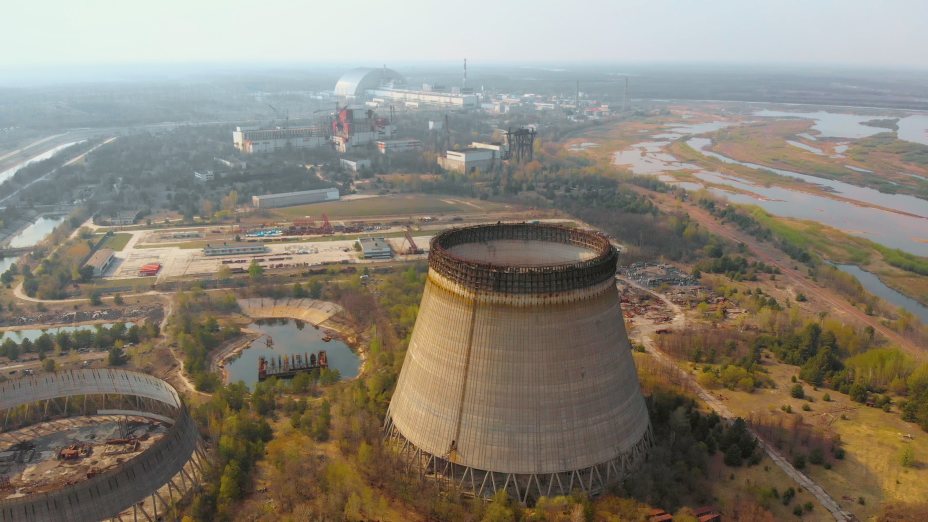
Yet, with 26 April marking the 40th anniversary of the Chernobyl disaster, it seems ironic that nuclear energy is staging a comeback.
Author and University of Milan professor Yaryna Grusha was born in Ukraine just a couple of months after the Chernobyl disaster. She highlights, in an interview with Radio 24 earlier this week, how little people understood about nuclear technology back then.
Yaryna Grusha, Professor of Ukrainian Language and Literature (in Italian):
“In the area surrounding the nuclear power station, people knew so little about nuclear power, about what radiation is, how it works, and how to behave in certain situations – in fact, they knew nothing at all! And in the first few hours after the incident, we see that the simplest things needed to protect oneself from radiation – such as protective suits, for example, or even simple iodine tablets – were lacking in the towns in the area, both in Pripyat and in Chernobyl. So the population living around the nuclear power station had grown up without the slightest awareness of what nuclear power actually was.”
Our Italian colleagues ask Marco Ricotti, a professor of nuclear engineering at the Polytechnic University of Milan, how much the 1986 disaster served to increase our knowledge, then. Ricotti answers that Chernobyl taught us very little from a technological standpoint – for two main reasons.
Marco Ricotti, Professor of Nuclear Engineering (in Italian):
“Firstly, because that type of Russian reactor would never have been built in the Western world. Indeed, I would say it would never have been built outside Russia because it was known to be unstable at low power. So [other] safety authorities would never have authorised its construction. And secondly, because that type of reactor did not have the safety structure that all other reactors have, the so-called containment vessel – that is, the shell designed to contain any radioactive material released in the event of an accident. A containment structure is normally made of either steel or reinforced concrete, and to give you an idea, the walls are one and a half to two metres thick.”
He adds that we learnt far more from the 1979 accident at Three Mile Island in the USA and the 2011 one in Fukushima, despite the fact that these incidents were less catastrophic.
But if we do turn back towards nuclear, could an event like Chernobyl happen again?
Marco Ricotti, Professor of Nuclear Engineering (in Italian):
“I would say no, precisely for the two technical reasons I mentioned, and also because all nuclear safety authorities around the world now strictly adhere to the International Atomic Energy Agency guidelines. Furthermore, continuous radioactivity monitoring networks are now very widespread. I would go so far as to say that they are accessible to everyone online in real time. If any of our listeners fancy having a browse online, they can search for the 'Remon' network – 'Radioactivity Environmental Monitoring'. They’ll find it straight away and can then monitor in real time what’s happening in Europe.”
Does nuclear have a future?
For a number of years now, leading centre-right politicians in Germany have been calling for a return to nuclear power and a reversal of the country’s much-feted nuclear phase-out in light of skyrocketing energy costs and severe issues with oil and gas supplies.
Influential voices in the CDU and CSU want to see decommissioned nuclear power plants reactivated and small modular reactors introduced.
For his part, Chancellor Merz, also from the CDU, regrets the country’s nuclear phase-out but considers it “irreversible”. CDU MP Lars Rohwer agrees, as is clear from comments he made during a debate in the Bundestag on Wednesday, says AMS.
Lars Rohwer, Member of the German Parliament – CDU (in German):
“EnBW describes the decommissioning at its sites as virtually irreversible. Preußen Elektra states that its plants can no longer be brought back into operation. These former nuclear power plant operators are already making their position clear.”
The right-wing AfD party wants an expert committee to examine this further, but the centre-left SPD and the Greens are staunchly opposed to any kind of return to nuclear power, arguing that this energy source is both expensive and dangerous. Here is German Green Alaa Alhamwi.
Alaa Alhamwi, Member of the German Parliament – Greens (in German):
“Every week, the same pointless debate about nuclear power. We might as well be having a weekly discussion about whether smoking is actually good for you after all.”
Former Lithuanian environment minister and current liberal MP Simonas Gentvilas argues, though, that the Russian energy giant Gazprom was the only winner when Germany turned its back on nuclear. He is talking to Žinių Radijas.
Simonas Gentvilas, Lithuania’s Former Minister for the Environment (in Lithuanian):
“It is clear that, after the Fukushima disaster, when it closed 13 reactors, Germany immediately signed contracts with Russia for the construction of Nord Stream pipelines across the Baltic Sea. Data now emerging from behind the scenes indicates that green organisations that campaigned in Europe against nuclear energy were funded by Russian giant Gazprom. There was only one winner from the shutdown of nuclear energy in Europe, especially in Germany – and that is Gazprom. Because Germany did not invest in renewable energy as it should have. And nor, by the way, did Lithuania, which remained dependent on imported electricity after it decommissioned the Ignalina Nuclear Power Plant. Only now – this year and next – will we really be producing sufficient quantities of our own electricity. This should have happened much earlier. There are of course huge drawbacks to nuclear energy, but it was replaced by a much more polluting and aggressive [energy source]: a Russian gas supply.”
But it seems inconceivable, surely, for the EU to turn back towards nuclear energy en masse now – with member states rushing to build new reactors or rebooting their existing ones. Žinių puts this to conservative MP Dainius Kreivys, whose four-year term as Lithuania’s energy minister ended in December 2024.
Dainius Kreivys, Lithuania’s Former Minister of Energy (in Lithuanian):
"I had to discuss this issue a lot, while I was still a minister, in the Energy Council. At that time, the EU had already split into two camps: one pro-nuclear, the other anti-nuclear. Unfortunately, Germany led the anti-nuclear camp. But today we can see that the situation is fundamentally changing. Small nuclear reactors are emerging, which essentially solve the problem of safety. And while today in Europe, we produce about 23 per cent of our electricity from nuclear, and [at least] 44 per cent from renewable sources, as the demand for electricity grows in the future, I believe that the number of nuclear reactors, especially small nuclear reactors, will inevitably increase in Europe. We are not yet seeing that boom because the technologies are only just starting to be approved."
Yet while the safety of nuclear energy production seems to have improved markedly, there is still very little discussion of how to deal safely with radioactive waste. That appears to be a problem shelved for another day... possibly one some considerable time from now.