(c) Shutterstock
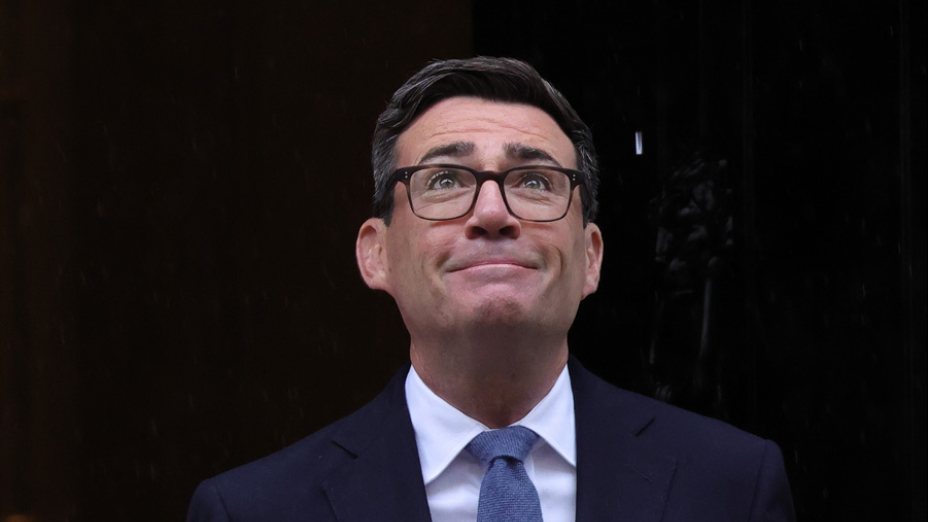
Burnham (and Breturn?) in Brussels
With attitudes towards Europe softening across the Channel, and a new leader in post in Westminster, a different kind of Brexit seems finally to be on the menu.
The deal that is in the offing will remove barriers to trade in food by aligning the UK with EU standards in the sector. In addition, it will link the two carbon emissions trading systems, enabling allowances issued under either scheme to be mutually recognised for compliance.
Inching closer
The new agreement, which is expected to be signed at today’s much anticipated summit (20 November), will also formalise a new youth mobility scheme and usher in closer cooperation in areas such as immigration and defence. An arrangement on university fees is also anticipated, but this may not be finalised until the spring.
We are still talking relative ‘baby steps’ for now, though. Although suggestions of a potential British return to the single market or customs union have been flying around, and even a new word – Breturn – coined, at this stage the only thing on the cards is a “closer relationship”.
Like many people in both the EU and the UK, Renew Europe MEP Petras Auštrevičius laments, in a recent interview with Žinių Radijas, that Brexit ever happened.
Petras Auštrevičius, Member of the European Parliament – Renew Europe, Lithuania (in Lithuanian):
“If we look at the bigger picture, Brexit is one of the greatest failures in modern British history. There is absolutely no doubt about that. Of course, it brought no benefits to the European Union either, as the EU suddenly lost one of its largest, most influential member states. In other words, I would always support looking for a way back.”
Héctor Sánchez is a lead researcher at the Barcelona Centre for International Affairs (CIDOB). He gives esRadio Castilla y León his take on why public opinion has been shifting in the United Kingdom.
Héctor Sánchez, Lead Researcher at CIDOB (in Spanish):
“The British were promised greater prosperity; they were told that the UK would have the capacity to sign trade agreements with the rest of the world. The reality, however, is that the rest of the world prefers to strike economic deals with the European Union, as it represents a much larger market than the UK does. They were also led to believe that, as a former global power, the UK would still have a say on the world stage – that it could make its own voice heard independently of the EU – but that has not proven to be the case either.”
This is particularly evident, he adds, in light of the weakening transatlantic bond between the UK and the US, with the British finally realising that the so-called ‘special relationship’ was perhaps more special to them than it was to their North American counterpart.
And what about from a European perspective? Weren’t the Brits a bit of a thorn in the side of progress in certain fields?
Héctor Sánchez, Lead Researcher at CIDOB (in Spanish):
“It is true that the British – at times deservedly – had a reputation for hindering progress toward European integration. Yet some member states would often hide behind the UK, letting it take the heat for stalling that integration; and, in truth, we haven’t made much more progress since then.”
Paulo Almeida Sande, an expert on European affairs who served as an advisor to the former Portuguese president, tells Renascença that he would be all for taking the UK back.
Paulo Almeida Sande, Expert on European Affairs (in Portuguese):
“The UK’s return to the EU would be something of a breath of fresh air for the EU itself; it would naturally give it new impetus. Greater legitimacy, even. The UK’s departure was a major… I won’t use the word ‘catastrophe’, but I can use the word ‘setback’... It was one of the greatest setbacks the EU has suffered as a political, economic and social project. On both sides, there is a sense that something has been lost. And objectively, something has indeed been lost – if we look at the data. Besides, it is a matter of common sense.”
He is not over-optimistic, though.
Paulo Almeida Sande, Expert on European Affairs (in Portuguese):
“In all honesty, I don’t think we’re anywhere close. It’s very difficult to envisage a scenario in which this could happen in the short term.”
Sánchez concurs, stressing that ‘Breturn’ is far from a done deal.
Héctor Sánchez, Lead Researcher at CIDOB (in Spanish):
“People have come to see that losing such an important ally was not a good idea; that parting ways with a partner as reliable as the EU was neither a sound move nor an intelligent strategy – especially in the increasingly complex world in which we live. That said, ten years on, the wounds from Brexit remain raw. Its effects are still ever-present. Consequently, reversing course is not an easy task. Moreover, the Europeans also found the experience pretty traumatic.”
A long and winding road
British businessman Adrian Bridge, chief executive of The Fladgate Partnership, a group that owns several major Port wine brands in Portugal, agrees that even though the economic case for ‘Breturn’ is indisputable, the path towards it is likely to take at least a decade.
Adrian Bridge, Chief Executive of The Fladgate Partnership (in Portuguese):
“Economically it is quite clear that the UK economy suffers outside Europe. The European economy is vast and has great potential… 350 to 400 million consumers represent a huge opportunity. The UK is also a strong economy where European products can be sold. But I think we need to proceed slowly, step by step, because politically it is complicated.”
Maria Simeonova is director of the Bulgarian office of the European Council on Foreign Relations. She emphasises the importance of this EU-UK Summit, coming as it is at a time when both public and political support for strengthened cooperation is growing – and not just in terms of economic cooperation.
Maria Simeonova, Director of the ECFR in Bulgaria (in Bulgarian):
“According to a recent survey by the European Council on Foreign Relations, there is public support for this in the UK. The majority of Britons want closer economic cooperation, and they are looking to Europe for security and defence.”
Simeonova goes on to say that this desire is mirrored on the other side of the Channel.
Maria Simeonova, Director of the ECFR in Bulgaria (in Bulgarian):
“This is a conversation about security guarantees, including how Europe will strengthen its defence capabilities in the context of a reduced US presence on the continent. And here the UK already plays a key role. I think that by building practical cooperation between London and Brussels on security matters and major geopolitical issues, mutual trust will gradually be restored – a process that will also manifest in more joint actions on the international stage.”
https://bnrnews.bg/main/post/555380/ima-li-obraten-pat-kam-evropeyskiya-sayuz-za-velikobritaniya
This said, Andy Burnham’s openly critical stance on Brexit is making some people in the UK quite nervous. Those with two feet still firmly in the ‘Leave’ camp have already started gathering their troops, Skai Radio reports, and a pressure group called Stay Out has been formed, with several influential backers.
Of course, one of the big arguments given FOR Brexit in the first place was to take back control of the UK’s borders. However, the problem of illegal migration into the UK has only appeared to worsen in the years since the vote. It could certainly be argued, says the Bulgarian ECFR director, that only through closer cooperation with the bloc can this flow be stemmed.
Maria Simeonova, Director of the ECFR in Bulgaria (in Bulgarian):
“Let me bring Bulgaria into the conversation. One of the pragmatic issues being discussed between London and Brussels is the fight against illegal migration. Since we form part of the EU’s external border, it is in London’s interest to work with Sofia.”
Despite the various hurdles along the path, Portugal-based businessman Adrian Bridge argues that the UK will ultimately find its way back to the fold.
Adrian Bridge, Chief Executive of The Fladgate Partnership (in Portuguese):
“We need to put forward the positive arguments effectively: security, the potential for greater economic growth in the UK, and the ability for people to travel easily. One of the major issues, in my view, will be what to do about the pound and the euro. This economic link will be a very complex issue that requires a great deal of debate. So it won’t happen overnight. We’ll need to put forward our arguments effectively, but I think it’s inevitable that the UK will rejoin, because on its own, it doesn’t have the same potential.”
This echoes comments made by Andy Burnham himself, in which he said that he had no intention of rushing to reverse Brexit, and certainly not without a clear mandate to do so, but that he hopes to see the UK back inside the bloc in his lifetime.
Finally, German EPP member Verena Mertens was asked by AMS for her thoughts ahead of the summit. She said that she is all for removing barriers, but insisted there can be no cherry-picking.
Verena Mertens, Member of the European Parliament – EPP, Germany (in German):
“Great Britain remains an important partner for us. In the realm of security, in particular, we must work more closely together again. From my time in the criminal police, I know that terrorism and organised crime recognise no borders, and Brexit must not be allowed to hinder our investigators. Economically, too, we need to see a reduction in barriers. My expectation for this summit is therefore very clear: less bureaucracy, better cooperation and tangible progress. At the same time, our red line is equally clear: anyone who wants to enjoy the benefits of the EU must also adhere to its standards.”
Prime Minister Burnham’s legal team is currently hard at work attempting to draft a watertight ‘EU Partnership bill’ that will enable the automatic adoption in the UK of certain laws made in Brussels. But this bill is likely to be vociferously resisted by opposition MPs, who will claim it undermines UK sovereignty. To assuage their concerns, Burnham is thus attempting to negotiate some degree of British involvement in shaping EU legislation.
Whether things are clearer after today’s summit remains to be seen.