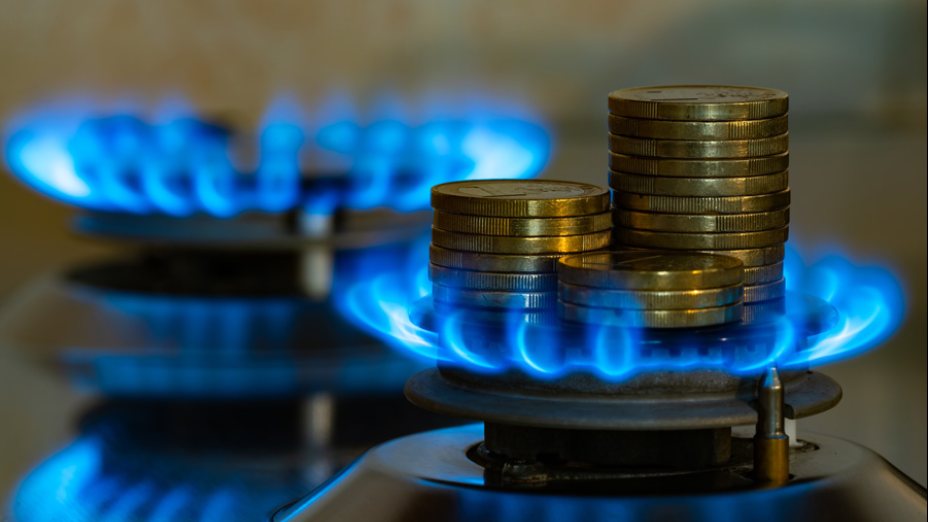
(c) Shutterstock
Europe remains energised over the energy issue
Energy ministers met informally in Dublin on Monday and Tuesday to discuss the energy price crisis, innovation and energy security.
While the meeting led to no formal outcomes, it did keep the issue prominent in the media.
Store, store, store
France’s euradio reports on a letter sent to the bloc’s energy ministers last Friday (25 September). In it, the EU’s energy commissioner, Dan Jørgensen, calls on member states to reduce their gas and electricity consumption in an attempt to tame energy prices.
The commissioner’s initiative comes in the context of constrained gas supplies and gas storage levels across the bloc being at a historic low as winter approaches. This latter point is confirmed by Simona Benedettini, an energy economist specialising in energy policy, regulation and competition in energy markets, who is talking to Radio 24.
Simona Benedettini, Energy Economist (in Italian):
“While Italy is almost on track to meet the 90-per-cent natural gas storage target set by Europe, Europe as a whole is still a long way off. We are talking about storage levels of around 71 per cent, well below the average for the same period last year.”
Emergency oil reserves are also somewhat depleted, but according to the International Energy Agency (IEA), 80 per cent of global stocks remain. Stocks can only be released with the unanimous agreement of IEA member states.
As things stand, several European countries are under pressure from the US to release the remaining stocks covered by a March 2026 agreement in order to ease global prices. Yet, despite the threat of the US cutting off its diesel exports, this demand continues to be met with some resistance on this side of the Atlantic.
Lithuanian economist Algirdas Bartkus understands this resistance.
Algirdas Bartkus, Lithuanian Economist (in Lithuanian):
“A mistake was made – we have to admit this – when reserves were released in the spring, because oil reserves are meant to sustain us at a time when there is no physical supply. After all, if there is no diesel, there will be no food. It’s as simple as that. Our first problem will be that we will need to supply the shops with food, along with everything else. We’re talking about a strategic resource here, not some random eco-issue.”
Speaking to Radio 24, Cristian Maretti, president of Italian agrifood association Legacoop Agroitticoalimentare, illustrates this link between oil and food by citing a specific example: that of Italy’s fishermen.
Cristian Maretti, President of Legacoop Agroitticoalimentare (in Italian):
“We’ve found ourselves having to make fewer fishing trips, because in order to pass on the cost to the market, the fish would have had to… Well, we simply wouldn’t have managed it. So, for now, for a few days a week, we have decided to stay in port. [...] We’re facing fuel costs that are almost 70 per cent higher than when we last refuelled our tanks in early February.”
https://www.radio24.ilsole24ore.com/programmi/focus-economia
Reduce, reduce, reduce
During the OPEC oil crisis in the 1970s, several Western European countries ended up imposing reduced speed limits on motorways. Some even restricted the days on which cars could be used.
Portugal’s environment and energy minister, Maria da Graça Carvalho, tells Renascença that her government has ruled out, for now, the imposition of mandatory restrictions of this type, but still wants everyone to play their part.
Maria da Graça Carvalho, Portugal’s Minister for the Environment and Energy (in Portuguese):
“What we have been doing – and what the Commission has asked us to do – is to call for a voluntary reduction in consumption. For journeys that are not absolutely necessary, and for which alternatives may be available, we advise that these alternatives be used. But we have not yet reached the point of imposing such measures, as has been done in the past.”
Meanwhile, Luís Graça, a member of the opposition, urges the government to go further.
Luís Graça, Member of the Portuguese Parliament – Socialist Party (in Portuguese):
“It is not enough simply to tell people that we need to save petrol and give each other lifts. The government needs to govern, and governing means drawing up contingency plans to respond to an emergency. It seems to me that it would make more sense, for example, for the government to be preparing a plan in case it becomes necessary for the public sector to return to remote working – and even to call on the private sector to help develop this contingency plan should the need arise.”
Alleviate, alleviate, alleviate
Commissioner Jørgensen confirms that a two-pronged policy is required at EU level too – one prong focusing on the longer term while the other looks to tackle the immediate impact of the energy crisis.
Dan Jørgensen, European Commissioner for Energy (in English):
“Europe's strategy must be twofold. First, doubling down on the clean transition and implementing structural changes. Then the other leg of the work is to be flexible, pragmatic. In this very difficult transition period, we must help member states, companies and citizens to handle this crisis.”
With the latter prong in mind, the German Bundestag has approved a fuel tax rebate spanning the final quarter of 2026, to bring down costs for the country’s motorists.
Katharina Dröge is co-chair of the Green Party’s parliamentary group in the Bundestag. She is angry that the measure, which is set to cost some 2.5 billion euros, will put a heavy strain on public funds, when instead it could be funded through a windfall tax on corporations. Her comments are shared by AMS.
Katharina Dröge, Member of the German Bundestag – Green Party (in German):
“This fuel rebate has failed for two reasons: firstly, because it does nothing to address the root cause of the extremely high petrol prices. That is the blockade of the Strait of Hormuz, and the only thing you can do about it is to help people use less diesel or petrol and switch to alternatives. That would be a sensible policy. The second thing you can do is to finally introduce a windfall tax.”
In Bulgaria, there is an ongoing, and as yet unresolved, debate about the imposition of windfall taxes on energy companies – in particular Russian giant Lukoil. In the meantime, though, natural gas and LPG are to be sold free of excise duty, reports BNR.
But according to Nikolay Kacharov – managing director of a company that extracts gas and oil in Egypt, and previously a senior executive at French energy giants Gaz de France and EDF – this measure is a drop in the ocean, and entirely political.
Nikolay Kacharov, Senior Energy Executive (in Bulgarian):
“To be honest, this will have no real economic impact, as the Bulgarian economy is barely affected by such a measure. In my view, this is a political rather than an economic move, intended merely to show that something is being done. However, that is not the crux of the matter. Very few people will benefit from this measure. It is temporary. Furthermore, the excise duty accounts for only a small fraction of the product's price. We shall see what the effect is, but to me, this smacks more of populism than sound economics.”
On the subject of windfall taxes, the Commission continues to oppose drawing up a European instrument to tax the excess profits of oil companies, as it has done previously, arguing that national measures would be preferable. This said, Commissioner Jørgensen announced that member states could use the flexibility in the European regulation on gas storage to lower their 1 December filling targets from 90 per cent to 80 per cent of storage capacity to alleviate pressure on prices.
Diversify, diversify, diversify
But aside from tax cuts and reductions in fuel consumption, what other steps could be taken to ease the pressure? Greek member station Skai puts this question to Orestis Omran, a Brussels-based lawyer specialising in economic and energy issues, and chair of Synergia think tank.
Omran confirms that the next six months will be challenging, and that both national governments and the EU as a whole will have to resort to emergency measures to address high energy prices for both households and businesses. He has a few other suggestions to put forward too.
Orestis Omran, Energy Lawyer (in Greek):
“Finding alternative suppliers is one solution, and it has already been pursued to some extent, although not to its full potential. At the moment, particularly when it comes to the liquefied natural gas we use to fill our gas storage facilities, there is a tendency to rely predominantly on the United States. Nevertheless, we are also in talks with other suppliers.”
And on this note, could Europe turn to countries such as Israel or Egypt for natural gas?
Orestis Omran, Energy Lawyer (in Greek):
“When it comes, in particular, to Israel and Egypt, because the necessary infrastructure is not yet in place, we cannot import sufficient quantities of natural gas. We can, however, import electricity directly through the interconnectors that are currently being built, and that is one possible solution. In other words, instead of importing the raw material, you import the final product, potentially at a lower price. This is particularly relevant in the case of Egypt, which has vast areas where large-scale solar farms can be developed. This could make electricity cheaper once these infrastructure projects are completed. But, again, we are talking about very expensive infrastructure here.”
And returning to Commissioner Jørgensen’s first prong – that of doubling down on the green transition – the EU’s existing goal is for renewable energy sources to make up 42.5 per cent of its energy mix by 2030. As of yet, the bloc has no target in place for 2040, but the Brussels executive plans to put forward post-2030 changes by the end of this month.
With this in mind, Spain, Portugal and Luxembourg have appealed, in a letter to the European Commission, for an ambitious 2040 target specifically for renewable energy, rather than the slightly broader ‘low-carbon’ target that currently appears to be favoured by the Commission and a majority of member states.
Indeed, at the end of June, the European Nuclear Alliance – a coalition of 15 member states that back nuclear energy as a key tool in achieving the bloc’s climate goals, energy security and grid stability – argued that the EU should take a ‘technologically neutral’ approach to its energy policy, setting instead a ‘clean energy’ target, which would also encompass nuclear energy.
Whatever position is ultimately taken on the nuclear debate, Vilnius University economist Algirdas Bartkus tells Žinių Radijas that the EU’s overall bid to reduce its dependence on fossil fuels is already paying off. While the current energy crisis may seem bad, he says, it could have been a good deal worse.
Algirdas Bartkus, Lithuanian Economist (in Lithuanian):
“You have to ask yourself why this oil crisis hasn’t really caused a massive inflationary shock, and why we are seeing annual inflation of just five or six per cent. This is because these days, our dependence on oil is not as great as it was in the past. […] When you diversify, you become resilient.”
In the longer term, though, Orestis Omran has an even more radical proposal: to rethink entirely how the EU works. Criticising the bloc for constant talk and no action, he says that if it fails to evolve, it will become obsolete. But what, in his view, would this entail?
Orestis Omran, Energy Lawyer (in Greek):
“It would mean moving away from this rigid, bureaucratic approach – the excessive legislation and the multitude of institutions that are called upon to make decisions alongside member states – and moving towards a model that is, at the very least, more centralised. And I mean that in a positive sense: a model in which the EU institutions have real powers and the ability, with member states’ consent, to act swiftly and effectively.”